What Shapes Promotion Terms Across Roulette, Blackjack, and Slot Offerings in Quebec Virtual Casinos
Ben Fischer · Nov 8, 2026

What Shapes Promotion Terms Across Roulette, Blackjack, and Slot Offerings in Quebec Virtual Casinos
Promotion terms in Quebec virtual casinos emerge from an interplay of provincial regulations, game mathematics, and operator risk management strategies that differ markedly across roulette, blackjack, and slots. Observers note that these factors determine wagering requirements, game weighting, and eligibility rules while operators adjust offers to maintain compliance and profitability.
Regulatory Framework Guiding Promotions
Quebec maintains oversight through the Régie des alcools, des courses et des jeux, which sets boundaries on bonus structures and requires clear disclosure of terms before players accept any offer. Data from regulatory filings shows that operators must calculate contribution percentages for each game type based on theoretical return to player percentages, which leads to lower weighting for high-volatility titles and higher weighting for lower-edge games. In November 2026 recent compliance reports indicated continued emphasis on these calculations across licensed platforms serving Quebec residents.
Operators reference guidelines from the Régie des alcools, des courses et des jeux when designing promotions, yet they also incorporate internal models that account for player retention patterns observed over multiple quarters. This dual influence produces terms that vary by game category even when the headline bonus amount remains identical.
Game Mechanics and Their Impact on Terms
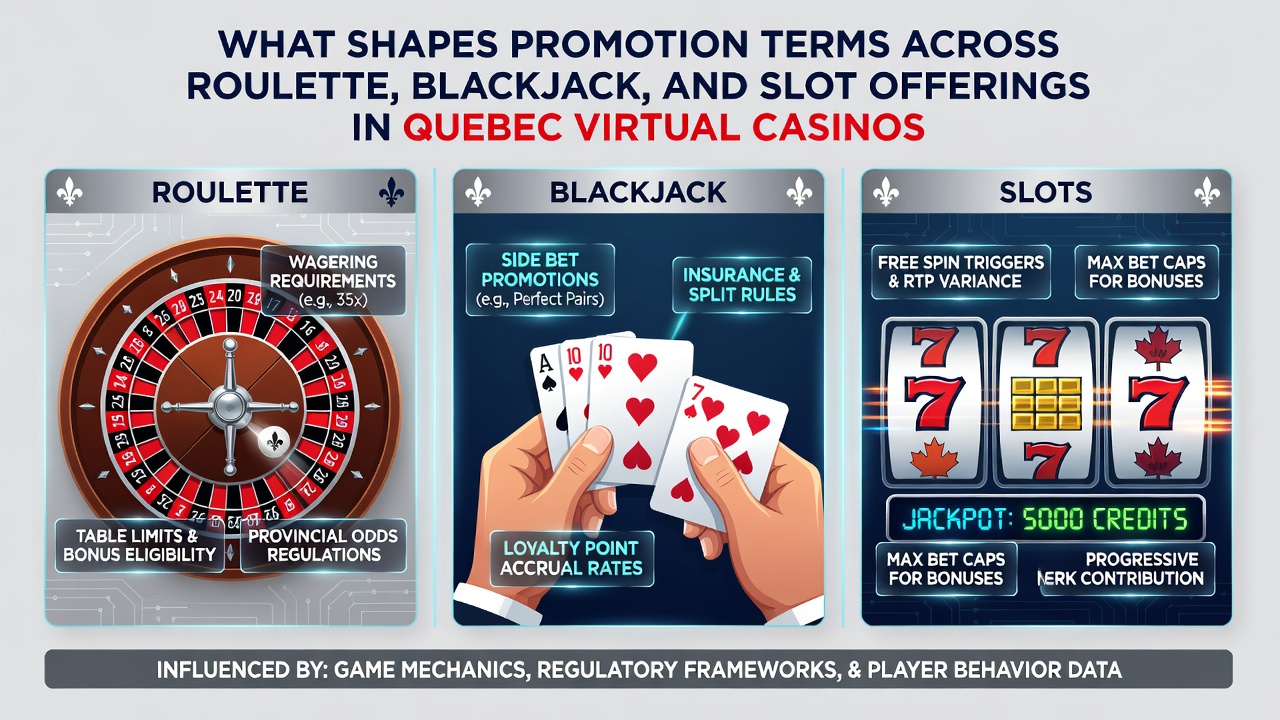
Roulette promotions often carry stricter wagering multipliers because the game features a fixed house edge that does not shift with player decisions, whereas blackjack terms frequently allow higher contribution rates due to the potential for skilled play to reduce the house advantage. Slots, by contrast, receive the most variable treatment since their volatility and hit frequency differ widely between titles, prompting operators to apply game-specific weighting that reflects average session length and payout distribution.
Studies on digital gaming behavior reveal that players tend to complete wagering requirements faster on medium-volatility slots than on European roulette variants, which influences how casinos structure the fine print. Blackjack bonuses meanwhile incorporate rules around splitting and doubling that protect operators from extended play sessions where skilled participants might minimize losses. These distinctions appear consistently in the terms and conditions published by Quebec-facing sites.
Market Data and Player Patterns
Industry analyses from late 2026 demonstrate that slot promotions in Quebec platforms typically feature the highest contribution percentages, sometimes reaching 100 percent, while roulette contributions hover between 20 and 50 percent depending on the variant offered. Blackjack terms fall in between, reflecting both the skill element and the slower pace of play that reduces overall handle per hour. Figures compiled by research groups show these patterns hold across multiple operators despite differences in marketing focus.
One study released by the Canadian Centre on Substance Use and Addiction examined how promotion structures affect session duration across game types, finding that slots with elevated contribution rates correlate with quicker completion of playthrough conditions. Roulette and blackjack promotions, when weighted lower, extend the time required to satisfy requirements and thereby influence player choices toward other categories. Observers note that these outcomes align with the mathematical properties of each game rather than arbitrary decisions by marketing teams.
Operational Considerations for Operators
Casino operators in the Quebec market balance these elements against revenue targets and compliance costs, which produces promotion calendars that rotate emphasis among game categories throughout the year. Slots receive frequent headline offers during periods of high player acquisition because their broad appeal and variable volatility allow rapid turnover of bonus funds. Roulette and blackjack promotions appear more selectively, often tied to specific events or loyalty tiers where operators can monitor participation rates more closely.
November 2026 data from platform analytics indicated that operators continued refining contribution tables after reviewing seasonal traffic patterns, with adjustments appearing most frequently in the slot category where new titles enter the market regularly. Blackjack terms showed greater stability, while roulette offers reflected ongoing efforts to manage exposure on even-money bets that carry predictable house edges.
Conclusion
Promotion terms across roulette, blackjack, and slot offerings in Quebec virtual casinos ultimately reflect measurable differences in game mathematics, regulatory mandates, and observed player behavior. Data compiled through 2026 continues to illustrate how these variables interact to shape the fine print that players encounter when claiming bonuses on licensed platforms.